Music & Culture · Article
BTB Savage: The Definitive Story of Darrell Gentry — Life, Music, Korea, Scam Mythology and Tragic Death
A deeply expanded definitive Chronicle biography, with documented reporting, news photography, catalog history, cultural context and source notes.
Published · Updated · 75 min read
# BTB Savage: The Life, Music, Army Years, Scam Mythology and Tragic Death of Darrell Gentry
The definitive Chronicle feature
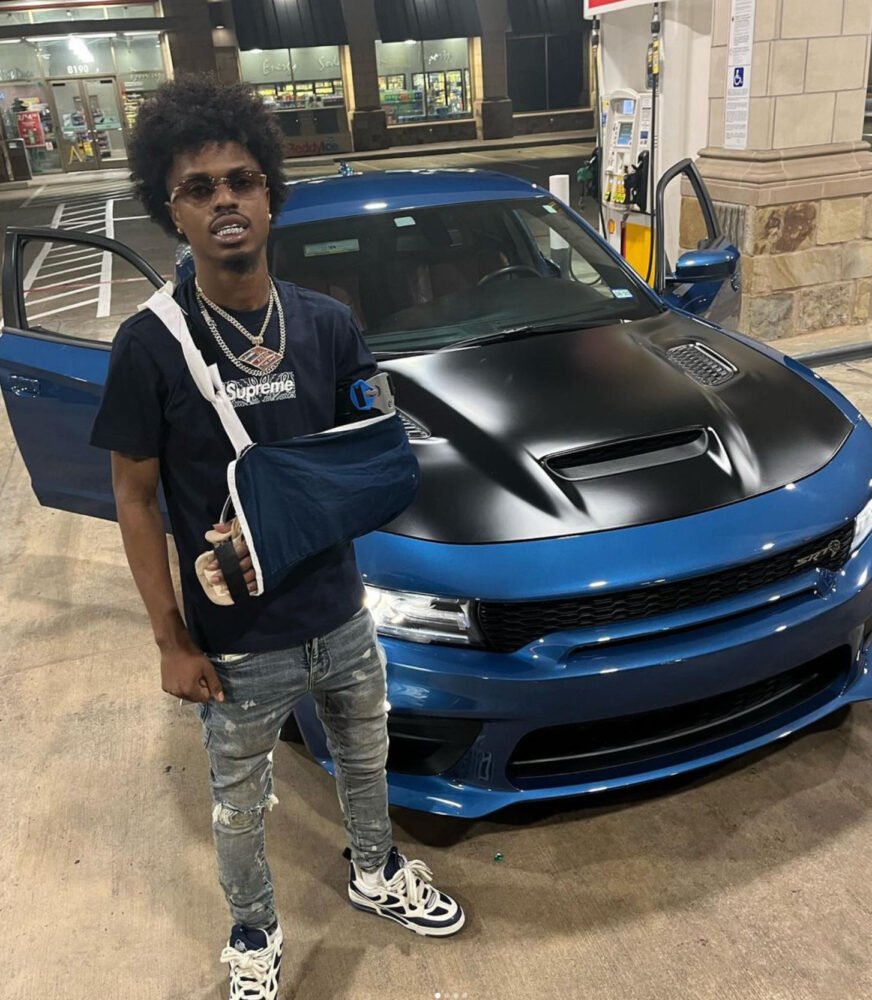
*Darrell Gentry, known as BTB Savage. News image via Instagram / Houston Public Media.*
Some artists have decades to separate the person from the persona. Darrell Gentry did not.
Known professionally as **BTB Savage**, Gentry lived several distinct lives before his death in Houston on March 30, 2023: athlete, Army soldier, serviceman stationed in South Korea, father, entrepreneur, independent musician, internet personality and emerging rapper. The public story later became dominated by his final weeks, but the full record is broader than a viral interview or one notorious photograph.
This consolidated Chronicle feature brings the earlier three-part archive into one continuous biography. It separates documented reporting from artist mythology, places the music back at the center of the story, preserves the news photography and source trail, and follows the catalog from *Break the Bank* and *Scam Party* through *Break the Bank 2*, “Montego Bay,” the final living-era releases and the posthumous catalog.
A note on method: rap is performance as well as autobiography. A lyric, interview boast or social-media caption can reveal how an artist wanted to be understood without functioning as a court record. Where claims are disputed or not independently established, this article identifies them as claims rather than facts.
The person before the persona
Darrell Gentry's later public identity was built around speed: fast money, fast transactions, fast jokes, fast songs, fast-moving online attention. His biography began somewhere much quieter.
Contemporary reporting after his death consistently described him as a father, Army veteran and businessman. His mother, Bernita Ward, repeatedly tried to restore that fuller picture after millions of people encountered her son mainly through headlines. That distinction matters because BTB Savage was a deliberately amplified public character. Darrell Gentry was the person who existed when the camera was off.
Basketball was among his early interests. The Army then became a major turning point. Ward told KPRC that he served for four years and deployed to South Korea. She also remembered Korea as part of the period when music became serious for him. The military therefore belongs in the story for more than biography-box completeness: it helped create the circumstances in which the future artist started imagining a different life.
!ABC13 / KTRK news image from coverage of BTB Savage and his mother Bernita Ward.

*News image from ABC13 / KTRK coverage of Darrell Gentry and his family.*
South Korea: where biography and mythology begin to overlap
South Korea became one of the most repeated locations in later BTB Savage lore. The documented foundation is straightforward: Gentry served there in the Army, and his mother said that period was important to his development as a rapper.
The more complicated layer came from Gentry himself. In an *Off The Porch* interview, he discussed a large fraud case while stationed in South Korea. That interview became part of the raw material from which listeners built the BTB Savage legend. It also helped connect his military biography to the banking and fraud vocabulary that later saturated his records.
But the internet tends to collapse three different categories into one: documented events, an artist's own storytelling, and rumors repeated by third parties. Those categories should stay separate. Stories about supposed fake marriages and other elaborate Korea schemes have circulated online, but circulation is not verification. They are better understood as part of the mythology around the artist unless supported by reliable records.
That distinction does not make the story less interesting. It makes it more revealing. BTB Savage's career existed at the point where autobiography, exaggeration, performance and internet folklore constantly touched each other.
Why “Break the Bank” worked as a name
The initials **BTB** — Break the Bank — compressed an entire artistic world into three letters. Traditional rap wealth imagery was still present, but Gentry's language was unusually tuned to the digital-finance era: accounts, wires, cards, banks, transactions, fraud, ATMs and systems.
That vocabulary placed him inside a broader current sometimes called scam rap. The style reflected a change in the environment around young artists. Earlier street narratives were often tied to corners, neighborhoods and physical contraband. In the smartphone era, money could move invisibly through screens. Rap did what it has always done: absorbed the language of its time.
BTB Savage's titles often announced that world immediately: *Break the Bank*, *Scam Party*, “Scam Story,” “Wire Fraud,” “Bank Log,” “Saved By The ATM,” “Check Buster,” and “I Scammed The Army.” The repetition was branding, but it was also world-building. A listener could recognize the universe before recognizing every song.
Short songs, direct ideas, internet-era pacing
A striking feature of the catalog is its compactness. Many tracks run around two minutes. That brevity made the music feel built for replay, clips and rapid discovery. Rather than stretching one concept across a long arrangement, the songs frequently arrive, establish the premise and leave.
That pacing matched Gentry's public persona. The records rarely felt hesitant. Even when the subject matter was complicated, the presentation favored immediacy. This is one reason the catalog deserves to be examined independently of the later crime coverage: the same instincts that made him compelling online were already audible in the records.
The first major run: Break the Bank, Scam Party and a recognizable voice
By 2022, BTB Savage was releasing at a pace that made the project feel less like an experiment and more like a career. *Break the Bank* and *Scam Party* established the recurring themes. “Scam Story” became one of the songs most closely associated with his name, in part because Gentry publicly framed it as rooted in a true story.
That statement is useful context, but it should not turn lyrics into affidavits. Rap has always allowed artists to compress time, combine events, heighten details and speak through a persona. The strongest way to read “Scam Story” is therefore as a record that intentionally blurs lived experience and performance — exactly the boundary that defined so much of BTB Savage's public identity.
*Scam Party* also demonstrated that the concept could sustain a project rather than a single novelty record. Titles such as “Wire Fraud 2,” “Turn Her Up” and “Exotic Rental Fraud” reinforced the financial vocabulary while giving the catalog a recognizable internal language.
Break the Bank 2: the catalog gets larger
Released December 23, 2022, *Break the Bank 2* expanded that world into a 17-track project. The sequence documented by streaming catalogs is:
- **First Day Out**
- **Break the Bank 2**
- **The Real Punchmade**
- **Clear The CC**
- **Frank AB** featuring YSR Gramz
- **1000 Miles** featuring Pros AP
- **Real Fraud**
- **Something I Never Wrote**
- **Saved By The ATM** featuring Juney Knotzz
- **Been Turnt 2** featuring Fatt Macc
- **2 Headed Goat** featuring Skilla Baby
- **Bank Log**
- **Double Up**
- **Montego Bay** featuring S3nsi Molly
- **Baby I Turn U Up**
- **I Scammed The Army**
- **Check Buster**
The track list matters historically because several songs later appeared as standalone posthumous releases. A later single date can make an older recording look new unless the original album chronology is preserved. *Break the Bank 2* proves that songs such as “Montego Bay,” “Baby I Turn U Up” and “I Scammed The Army” were already part of Gentry's released catalog during his lifetime.
Montego Bay: one song, two release moments
“Montego Bay,” featuring **S3nsi Molly**, sits at track 14 on *Break the Bank 2*. It later received a standalone release in 2025.
Those dates are not contradictory. The first documents when the song entered the catalog as part of the album; the second documents a later single campaign. This distinction is especially important with posthumous catalogs, where streaming services can foreground a new release date even when the recording itself predates the artist's death.
Musically and historically, “Montego Bay” also helps broaden the picture of BTB Savage beyond a one-note caricature. Collaboration was part of the catalog. The project included YSR Gramz, Pros AP, Juney Knotzz, Fatt Macc, Skilla Baby and S3nsi Molly, placing Gentry in a network of regional and internet-driven rap relationships rather than in isolation.
Persona versus person
One of the hardest things to reconstruct after a young artist dies is the distance between the stage character and ordinary life.
BTB Savage's public image emphasized invulnerability. Darrell Gentry's family remembered a son and father. Those descriptions do not cancel each other. They describe different contexts.
Social media intensifies the gap. Ordinary moments rarely travel as far as spectacle. A quiet family conversation is not reposted thousands of times. A provocative photograph can become permanently attached to a name. Over time, the algorithm can make the loudest fragment of a life appear to be the whole life.
That happened to BTB Savage with unusual force.
February 2023: the San Antonio confrontation
In February 2023, Gentry was involved in a deadly confrontation at his San Antonio residence. Reporting from KPRC, ABC13 and the Houston Chronicle described an encounter connected to what was presented as a music-related meeting that turned into an attempted robbery.
Omar Richardson died during the confrontation. Gentry was injured. San Antonio authorities investigated and treated Richardson's death as justified; contemporary reporting said the case was closed as a justifiable homicide.
That official outcome matters because online summaries frequently erase legal distinctions. Saying that a person died in a confrontation is not the same as saying Gentry was convicted of unlawfully killing him. He was not.
The event nevertheless changed the trajectory of Gentry's final weeks. He survived an extremely serious encounter, underwent treatment for his injury, and then spoke publicly about what happened.
When a traumatic event becomes content
On March 26, 2023, VladTV released an interview in which BTB Savage discussed the San Antonio incident. The interview rapidly became part of his public story.
The collision was almost inevitable: an emerging rapper, a frightening real-world event, a highly performative online persona and an internet economy that rewards dramatic first-person storytelling. What might once have remained a private or local event became searchable entertainment.
Ward later said she had urged her son not to keep escalating the public exchange around the incident. Her comments provide an important counterweight to the bravado that dominated reposts. A parent was looking at the same situation and seeing risk rather than content.
March 30, 2023: the final day
On March 30, Gentry posted photographs connected to the aftermath of the earlier San Antonio confrontation. The images spread quickly. Later that day, he was killed in Houston near the River Oaks area.
Houston police described the attack as targeted. Gentry was 26.
The proximity between the social-media post and his death became central to the way the story was told afterward. It is understandable why: the timing is startling. But chronology alone does not establish motive. Contemporary reporting and later court proceedings are more reliable guides to what investigators alleged than viral speculation.
The larger human fact is simpler. A 26-year-old father, veteran and musician died just as his career was gaining wider attention.
The investigation and the legal record
Authorities later charged **Montrel Lenard Burley** with murder in connection with Gentry's death. Reporting and court records described investigators' theory that the Houston killing was connected to the earlier San Antonio death and relationships surrounding that case.
The distinction between allegation and adjudication remains important. Burley was charged; coverage of a pending criminal case should not silently convert a charge into a conviction.
A later Texas appellate proceeding concerned Burley's bond. The First Court of Appeals affirmed the refusal to reduce a $1 million bond. That proceeding added public legal documentation to a story that had initially circulated largely through social media, interviews and breaking-news reports.
Bernita Ward and the effort to recover Darrell from BTB
After the killing, Bernita Ward repeatedly described the person behind the name. She spoke of military service, fatherhood, ambition and music. She also expressed sympathy for the other grieving family and summarized the destruction in language more durable than any online taunt: **nobody wins**.
That idea is one of the most important parts of the record. Internet narratives tend to sort people into winners and losers. Real violence leaves parents, children, partners and friends living with consequences long after a trending topic disappears.
Remembering BTB Savage responsibly means remembering that distinction.
The final living-era releases show momentum
The last weeks of Gentry's life did not look like a career winding down.
**“My Turn”** appeared on February 26, 2023.
**“Too Much Motion”**, a collaboration credited with BTB Savage, appeared March 20.
**“TSA”** featuring Juney Knotzz followed March 25.
Five days later, Gentry was dead.
Seen chronologically, the catalog suggests acceleration. New music was arriving, interviews were circulating, collaborations were accumulating and the name was moving beyond a niche audience. His death froze that momentum at precisely the moment more people were beginning to pay attention.
Posthumous releases and the problem of chronology
Posthumous catalogs require careful reading. Once an artist dies, the voice can continue appearing on new releases even though the artist can no longer make present-day decisions about timing, artwork, sequencing or promotion.
Streaming catalogs later listed releases including *TOO MUCH MOTION (Posthumous)*, *Fraud God*, and standalone singles drawn from material that in some cases had already appeared during Gentry's lifetime.
That does not make the releases illegitimate; it means listeners should distinguish between the date a recording was created or first released and the date a later edition or single was delivered to streaming services.
The most accurate history keeps both dates.
The catalog as autobiography — with limits
BTB Savage's music invites biographical reading because the titles and interviews so often point toward real experiences. Yet the catalog is strongest when approached as art rather than evidence.
An artist can transform a frightening event into a punchline, turn a financial story into a character sketch, exaggerate for rhythm, or repeat a rumor because it fits a persona. Those choices reveal something about identity and audience even when they do not establish literal fact.
This is particularly relevant to the Korea stories. Gentry himself discussed fraud. That is documented. More elaborate online claims require their own evidence. The responsible approach is not to erase the mythology, because the mythology became part of his fame; it is to label mythology as mythology.
Why the story became so viral
BTB Savage's story contained nearly every ingredient that modern platforms amplify: an instantly memorable name, provocative music, money imagery, an unusual military-to-rap biography, a dramatic interview, an online dispute, shocking timing and a young artist whose career ended before the public had finished discovering him.
Virality can create the illusion that everyone knows the story. Usually, everyone knows the same few fragments.
The purpose of a long-form biography is to restore sequence. Army service came before the headlines. Korea came before the persona fully hardened. Projects and collaborations came before the final interview. Fatherhood existed alongside the stage character. The catalog was already substantial before posthumous attention expanded it.
Sequence changes interpretation.
BTB Savage inside scam rap
The term “scam rap” can sound dismissive if it is treated only as a catalog of criminal claims. As a musical phenomenon, it is also a vocabulary of the digital economy. Banks replace corners; account language replaces older street slang; online systems become settings; financial institutions become symbols of both aspiration and antagonism.
BTB Savage understood the branding power of that vocabulary. “Break the Bank” was not merely a project title. It was a compact identity system.
That system made his work easy to recognize. It also made it easy for outsiders to reduce him to one subject. The catalog contains the tension common to strong personas: the branding that makes an artist memorable can become the box the public refuses to let him leave.
Collaboration as evidence of a growing network
Features across *Break the Bank 2* matter because careers are not built only through solo records. YSR Gramz, Pros AP, Juney Knotzz, Fatt Macc, Skilla Baby and S3nsi Molly appear across the project.
Each collaboration placed BTB Savage beside another audience and another creative network. That is how independent rap ecosystems often grow: not through one giant institutional launch, but through overlapping circles of producers, featured artists, interview platforms, social pages and streaming recommendations.
By early 2023, those circles were widening.
What the posthumous attention changed
Death changes how an audience listens.
A boast can suddenly sound ominous. A casual line can be treated as prophecy. A release title can be interpreted through events that happened later. This backward reading is emotionally understandable but historically dangerous.
The records were made by someone who expected a future.
That is worth holding onto. *Break the Bank 2* was not created as a memorial album. “Montego Bay” was not originally a posthumous single. The final releases were not presented as a farewell sequence. They became those things only because history interrupted the career.
The limits of the internet archive
BTB Savage's career also demonstrates how fragile digital history can be. Links change. Posts disappear. Streaming metadata is revised. Reuploads can carry later dates. Interviews may be clipped into fragments that remove context.
A serious archive therefore has to triangulate: contemporary news reporting for events; court records for legal claims; family interviews for personal recollections; streaming catalogs for release chronology; and the artist's own interviews for statements about his persona and experiences.
No single source can carry the whole biography.
A fuller timeline
**Before music became the center:** Gentry pursued basketball interests and later entered the U.S. Army.
**Army period:** He served for roughly four years and spent time in South Korea. His mother later connected this period with the beginning of his music ambitions.
**2022:** The BTB Savage catalog accelerated through projects including *Break the Bank*, *Scam Party* and *Break the Bank 2*. The banking-and-fraud vocabulary became a defining part of his public identity.
**December 23, 2022:** *Break the Bank 2* arrived with 17 tracks, including “Real Fraud,” “Saved By The ATM,” “2 Headed Goat,” “Montego Bay,” “I Scammed The Army” and “Check Buster.”
**February 2023:** A deadly confrontation occurred at Gentry's San Antonio residence. Authorities treated the death of Omar Richardson as justified. Gentry survived with an injury.
**March 2023:** New music continued arriving. Gentry discussed the San Antonio incident publicly in an interview that spread widely online.
**March 30, 2023:** Gentry posted provocative photographs connected to the earlier scene and was later killed in Houston in what police described as a targeted attack.
**April 2023 and after:** The investigation produced a murder charge against Montrel Lenard Burley. Gentry's mother spoke publicly about her son, his military service, fatherhood and the need to end the cycle of loss.
**2023–2025:** Posthumous releases and reissued singles continued to expand the streaming catalog, sometimes giving older recordings new release dates.
Essential listening and catalog landmarks
### Break the Bank
An early statement of the identity that would define the name itself.
### Scam Party
A project that pushed the financial vocabulary to the foreground and included “Scam Story.”
### Scam Story
One of the clearest examples of BTB Savage turning the boundary between claimed experience and rap storytelling into part of the appeal.
### Break the Bank 2
The most useful single snapshot of his late-2022 catalog: compact songs, collaborations and recurring motifs delivered at high speed.
### Real Fraud
A title that distills the persona almost perfectly.
### 2 Headed Goat featuring Skilla Baby
A collaboration that connects the project to a wider rap network.
### Montego Bay featuring S3nsi Molly
A lifetime album cut that later received a posthumous standalone release, making it a useful example of why catalog chronology matters.
### Too Much Motion
A phrase and title that became closely associated with the final period of Gentry's life.
What survives
Darrell Gentry's life cannot be reduced to the manner of his death.
He was a veteran before he was a headline. He was a father before strangers debated him online. He had already built a catalog before tragedy made millions more curious about it. He created a persona powerful enough to outlive him, but the persona is not the only thing that deserves to survive.
What remains is music, interviews, family testimony, reporting, court records, photographs and the complicated digital footprint of a young artist who understood attention extremely well.
There is also an unfinished question hanging over the catalog: what would BTB Savage have sounded like with another five years?
No archive can answer that.
It can only make sure the years he did have are remembered in the right order.
# Expanded definitive biography and catalog analysis
The Army years in proportion
Four years of Army service occupy a large share of a life that ended at 26. Treating that period as a one-line prelude to rap makes the biography smaller than the record supports. Military life placed Darrell Gentry inside an institution defined by schedules, hierarchy, rules, relocation and collective identity. The later BTB Savage persona projected almost the opposite image: independence, speed, self-direction and entrepreneurial control. That contrast is useful because it shows how dramatically a public identity can differ from an earlier chapter of the same life.
South Korea was part of that military experience. Family reporting later connected the period overseas with Gentry's growing interest in music. In retrospect, Korea became inseparable from the fraud stories he told in interviews, but the place mattered before those stories became internet mythology. It was where a young soldier was living while the ambitions that would eventually become BTB Savage were beginning to take shape.
South Korea before the mythology
The internet remembers South Korea largely because Gentry later told extraordinary stories about fraud during his military period. That is only one layer of the chapter. Before it became lore, Korea was an overseas posting and a formative adult experience. A responsible biography should preserve that ordinary foundation before examining the sensational claims that accumulated around it.
This distinction matters because viral storytelling compresses places into symbols. Korea became shorthand for a collection of stories about money, military life and alleged schemes. Once a location acquires that symbolic meaning, later retellings can make every rumor feel plausible simply because it fits the established narrative. The archive should resist that process. Gentry's own interview claims are relevant because he made them publicly. Additional stories require their own evidence. The difference between what he said, what others repeated and what independent reporting establishes should remain visible.
How internet folklore hardens into biography
Celebrity folklore often forms through repetition rather than verification. An artist tells a dramatic anecdote. A clip account extracts the most sensational portion. A commentary channel summarizes the clip. A social post adds an unsupported detail. Another video cites that post. Within weeks, audiences can lose track of which parts came from the artist and which parts appeared later.
BTB Savage was especially vulnerable to this process because the persona made extraordinary financial stories feel on-brand. The wilder a rumor sounded, the more easily it could be absorbed into the character. That does not mean every rumor was false; it means consistency with a persona is not evidence. The fake-marriage stories sometimes attached to his Korea period are a good example. They belong in a discussion of the mythology because people repeated them, but without reliable corroboration they should not be presented as established events. Accuracy is more durable than a dramatic retelling.
From soldier to independent artist
The transition from military life to independent music is one of the most consequential changes in Gentry's biography. The Army supplies structure from the outside. An independent music career requires the artist to build structure for himself: recording, releases, artwork, collaborators, interviews, promotion and audience development all have to keep moving.
That helps explain why the language of motion became so natural around BTB Savage. Independent artists live by momentum. A new song creates a reason to post. A feature creates access to another audience. An interview turns personality into discovery. A viral clip sends listeners backward through the catalog. None of those channels needs to wait for a traditional label campaign. Gentry's career belonged to that streaming-era ecosystem, where a recognizable identity and consistent output could build national awareness without following the old industry sequence.
Why Break the Bank was powerful branding
“Break the Bank” did several jobs at once. It produced the initials BTB, gave the artist a memorable name and summarized the financial vocabulary that would run through the catalog. Strong branding often feels inevitable after it succeeds, but clarity is difficult to achieve. A listener encountering the name for the first time could understand the broad artistic world immediately.
The phrase also created continuity between releases. Banks, accounts, wires, cards, ATMs, checks and fraud were not isolated references. Together they formed a recognizable vocabulary. That consistency made the catalog easier to navigate and the persona easier to remember. It also created a trap: the stronger the branding became, the easier it was for outsiders to assume the brand represented the entire person. Darrell Gentry contained experiences and relationships that could never fit inside three initials, even when those initials became the public's dominant way of knowing him.
Scam rap and the digital economy
Scam rap is often discussed only in terms of criminal subject matter, but as a musical phenomenon it also documents a change in everyday language. By the early 2020s, digital payments, online banking, account verification, instant transfers and financial apps had become ordinary parts of life. Rap absorbed those systems just as earlier generations absorbed the vocabulary of neighborhoods, cars, clubs and street economies.
BTB Savage pushed that vocabulary to the foreground. Technical-sounding financial phrases could become punchlines, titles and status symbols. The language gave the songs specificity. Listeners familiar with the terminology recognized the references immediately; listeners outside the world encountered a coded environment they had to learn. That mixture of accessibility and mystery is powerful in subgenre formation. It makes the music feel like it has rules, objects and rituals of its own.
The humor inside the financial vocabulary
The BTB Savage catalog was not compelling only because its themes sounded dangerous or transgressive. Some of the appeal was comic. A title like “Saved By The ATM” works because it turns a mundane financial machine into the hero of a dramatic phrase. The collision is absurd enough to be memorable.
Humor is important when separating persona from literal autobiography. Rap can exaggerate, compress, invent and joke while still drawing energy from lived experience. Treating every title as a sworn statement removes the playfulness that helps explain why the music worked. Gentry's brand could sound boastful, technical and funny at the same time. Those tones do not cancel one another. They are part of the same performance language.
Short songs and streaming-era attention
Many BTB Savage tracks are compact. In an earlier album economy, short runtimes might have seemed unusual; in the streaming era they fit a wider shift toward immediacy. A song that reaches its premise quickly can encourage replay, fit playlists easily and produce sections that travel well in short-form clips.
The brevity also matched Gentry's persona. The music rarely seemed interested in waiting for the listener. Ideas arrived quickly, titles announced the concept and the record moved on. That pacing made the catalog feel like the public identity: always in motion. Short does not mean insignificant. A two-minute recording can carry a durable hook, a memorable phrase or a collaboration that becomes historically important after the careers around it change.
The early Break the Bank material
The earlier *Break the Bank* material matters because it shows the identity before later events transformed public perception. When listeners first encountered the concept, it was not a memorial and not a prelude to a crime story. It was an emerging artist defining his lane.
Hearing those releases chronologically restores that original meaning. The recurring financial language sounds like branding and world-building rather than prophecy. The confidence sounds like career construction rather than a clue to a future tragedy. This is one reason chronological listening is essential with artists who die young: knowledge of the ending can distort everything that came before it. The early material deserves to be heard as work made by someone expecting more releases to follow.
Scam Party and sustained world-building
*Scam Party* demonstrated that the financial concept could sustain more than a single novelty record. A project title acts like an invitation into a particular world, and tracks such as “Scam Story,” “Wire Fraud 2” and “Exotic Rental Fraud” reinforced the internal language of that world.
Consistency can be artistically risky because repetition can turn into gimmick. In Gentry's case, the recurring vocabulary instead became a recognition system. New listeners could understand the persona quickly, while returning listeners encountered variations on familiar themes. The project helped establish that BTB Savage was not simply a name attached to random singles. There was a coherent concept connecting the releases.
Why Scam Story invites literal reading
“Scam Story” is almost designed to provoke the question: did this really happen? The word “story” promises sequence and specificity, while Gentry's interviews encouraged listeners to connect the music with experiences he claimed to have lived. That combination makes the record feel autobiographical even before anyone begins checking details.
The safest critical approach is to preserve the ambiguity. The song can be informed by real experiences without every element functioning as documentary evidence. Artists combine events, change details, exaggerate for effect and shape stories around rhythm. The record is valuable precisely because it demonstrates how BTB Savage blurred autobiography and persona. Turning it into a police report would misunderstand what rap storytelling does.
December 2022 as a crucial snapshot
December 2022 is one of the most important points in the chronology because *Break the Bank 2* arrived before the events that would dominate the following year. The album therefore captures BTB Savage in a forward-looking career moment.
Listeners at the time did not hear the track list as foreshadowing. They heard a 17-track project from an artist expanding his catalog, collaborating with peers and reinforcing a recognizable brand. Restoring that original context is essential. The tragedy of March 2023 should not be allowed to reach backward and turn every December title into an omen.
First Day Out
Opening *Break the Bank 2* with “First Day Out” creates immediate motion. The phrase has a long rap history associated with return, freedom and reentry. Within the BTB Savage catalog it also fits the broader obsession with momentum: the sense that something is happening right now and the listener has arrived in the middle of it.
As an opener, the track does not need a long exposition. The title itself carries cultural meaning, and the compact format moves rapidly into the rest of the project. That economy is characteristic of Gentry's catalog. He often relied on strong concepts rather than long introductions.
Break the Bank 2 title track
A title track named after the central brand has a special role. “Break the Bank 2” reinforces the phrase that organizes the artist identity and makes continuity explicit. The listener is not entering a disconnected project; this is another chapter in an already named world.
That repetition is commercially useful, but it is also archival evidence of how deliberately the identity was being consolidated. By late 2022, “Break the Bank” was more than a clever phrase. It had become the container into which new songs, stories and collaborations could be placed.
The Real Punchmade
“The Real Punchmade” places BTB Savage within a broader conversation around internet-native scam rap. Titles can signal competition, affiliation, humor or positioning without providing enough evidence to infer a literal dispute. What matters historically is that Gentry understood the scene around him and used titles that listeners inside that scene would recognize as part of an ongoing conversation.
This is another reason the catalog should be read culturally as well as biographically. A song title can reference a musical ecosystem without being a factual claim about another person.
Clear The CC
“Clear The CC” demonstrates the compressed, technical language that gave scam rap much of its identity. Acronyms and procedural phrases can sound almost like fragments of an interface or instructions removed from context. In music, that opacity becomes style.
Listeners who know the vocabulary receive one experience; outsiders receive another. The gap creates exclusivity, curiosity and sometimes humor. BTB Savage repeatedly used that gap as part of his branding.
Frank AB and YSR Gramz
“Frank AB,” featuring YSR Gramz, documents one branch of the collaborative network around Gentry. Features are not merely additions to a track list. They connect audiences. A listener following YSR Gramz can discover BTB Savage, while BTB Savage listeners can move in the opposite direction.
Independent rap careers often grow through exactly this kind of network effect. Instead of one giant promotional machine, overlapping communities create discovery. Each collaboration becomes both music and infrastructure.
1000 Miles with Pros AP
“1000 Miles,” featuring Pros AP, is useful because its title breaks from the project's most obvious financial vocabulary. A 17-track album needs variation if its central concept is going to remain engaging. Titles like this widen the emotional and thematic surface of the project.
The feature also adds another node to the collaboration map. The more those nodes accumulate, the clearer it becomes that BTB Savage was participating in a living scene rather than operating as an isolated internet character.
Real Fraud and the authenticity paradox
“Real Fraud” contains a contradiction in two words. “Real” signals authenticity; “fraud” signals deception. That paradox is almost a miniature statement of the BTB Savage persona.
Rap audiences frequently demand that artists be authentic while also rewarding exaggeration, theatricality and larger-than-life storytelling. Gentry's credibility partly depended on convincing listeners that the outrageous stories had roots in lived experience, even as the performance amplified them. “Real Fraud” captures that tension without requiring a literal interpretation of every line.
Something I Never Wrote
“Something I Never Wrote” stands out because the title introduces ambiguity into a project otherwise filled with direct declarations. Variation matters in a heavily branded catalog. It prevents the central theme from flattening every song into the same idea.
For an archive, unusual titles are reminders not to reconstruct an artist only from the most famous motif. The financial language was central, but it was not the only possible frame through which Gentry could write.
Saved By The ATM with Juney Knotzz
“Saved By The ATM,” featuring Juney Knotzz, may be one of the clearest examples of BTB Savage's conceptual humor. It gives a piece of financial infrastructure the role normally occupied by a person or dramatic intervention.
Juney Knotzz also appears elsewhere in the late-career timeline, making the collaboration more significant than a single guest spot. Recurring collaborators can reveal creative relationships that a simple list of features hides. In a short career, those repeated connections carry extra archival weight.
Been Turnt 2 with Fatt Macc
“Been Turnt 2,” featuring Fatt Macc, shifts the vocabulary away from strictly financial language and toward a more general statement of energy and status. The sequel framing also implies an internal history beyond this one album.
That sense of continuity matters because BTB Savage was building a catalog with recurring concepts rather than assembling a random collection of tracks. Even short songs could point backward to earlier material and forward to an identity still being developed.
2 Headed Goat with Skilla Baby
“2 Headed Goat,” featuring Skilla Baby, became increasingly interesting as the careers around the recording evolved. Collaborations freeze artists at one moment. Later success, changing scenes and death can make the same recording carry different historical weight.
For Gentry, the feature documents another bridge into a wider rap network. It also reminds listeners that his career was interacting with artists whose own trajectories would continue after his stopped. The song is therefore both a record and a timestamp.
Bank Log
“Bank Log” returns directly to the specialized vocabulary at the heart of the brand. The phrase is compact enough to resemble interface language, which is part of what made scam rap aesthetically distinct.
Digital systems supplied objects, verbs and procedures that could be repurposed as rap imagery. Gentry's catalog repeatedly demonstrated how quickly technical language can become cultural language once music gives it rhythm and personality.
Double Up
“Double Up” works because the phrase is flexible. It can refer to money, momentum, ambition or simply the desire for more. That openness gives the title a broader reach than the most technical financial references around it.
Within the sequence, it also reinforces the album's forward drive. The project rarely sounds interested in stasis. Even the language implies increase, movement and acceleration.
Montego Bay in its original context
“Montego Bay,” featuring S3nsi Molly, was already part of *Break the Bank 2* in December 2022. That fact should anchor every later discussion of the song. Its subsequent standalone release is a second public moment, not the origin of the recording.
The distinction matters because posthumous streaming pages can make old material look new. A listener discovering the single years later may reasonably assume it was created for that later release unless the album chronology is preserved. “Montego Bay” is therefore both a song and an excellent example of why music archives need dates.
S3nsi Molly and collaboration beyond the core theme
The S3nsi Molly feature on “Montego Bay” also helps widen the picture of BTB Savage. Collaborations can pull an artist away from the narrowest expectations of his brand. They create opportunities for different chemistry, pacing and audience overlap.
That is important for an artist often reduced to one subject. The more closely the catalog is examined, the harder it becomes to treat BTB Savage as a single gimmick. The network around the music was broader than the headlines that later defined him.
Baby I Turn U Up
“Baby I Turn U Up” is another title that expands the project's vocabulary beyond banking terminology. Its presence helps keep the album from becoming a glossary of one theme.
Strong branding does not require every track to repeat the same phrase. In fact, contrast can make the core identity more effective. The listener recognizes the BTB world while still encountering records that move into more familiar relationship and lifestyle language.
I Scammed The Army and biographical temptation
Few titles invite literal reading more strongly than “I Scammed The Army,” because Gentry actually served in the Army and later discussed fraud-related experiences from his military period. The overlap is real. The temptation to treat the song as evidence is therefore strong.
That temptation should be resisted. A title can deliberately exploit the listener's knowledge of the artist's biography without proving every detail of an event. Historically, the song is significant because it shows Gentry folding military identity into the BTB Savage character. The former soldier became material for the rapper. That transformation is itself worth documenting.
Check Buster as a closing statement
“Check Buster” closes the 17-track sequence with the financial vocabulary still intact. By the end of the album, the listener has moved through banks, cards, ATMs, checks, fraud and repeated declarations of motion.
The consistency makes *Break the Bank 2* one of the clearest surviving documents of the persona at full strength. In a longer career it might have become one phase among many. Because Gentry died three months later, it carries the additional weight of being a major late-lifetime project.
Collaborators as a map
YSR Gramz, Pros AP, Juney Knotzz, Fatt Macc, Skilla Baby and S3nsi Molly should be read as more than names in parentheses. Together they form a map of creative relationships.
Independent music scenes are networks. Features move listeners between nodes. Interviews, producers, videographers and social pages add more connections. BTB Savage's growing web suggests a career accumulating reach through many small bridges rather than one institutional launch. That pattern is typical of internet-era rap and central to understanding his momentum before March 2023.
Juney Knotzz and recurring creative ties
Juney Knotzz is especially notable because the name appears across more than one point in the catalog, including the late living-era release “TSA.” Repetition changes the meaning of a feature. It suggests an ongoing creative connection rather than a one-time pairing.
In a short career, recurring collaborators help reveal the relationships around the artist that might otherwise disappear beneath headlines. They also provide continuity across projects and singles.
The visual identity
BTB Savage's career was not only heard. It was seen. Social media made photographs, clothing, vehicles and body language part of the same brand system as song titles and interviews.
The visual presentation emphasized confidence and motion. That consistency helped the persona travel across platforms, because a viewer could receive an impression of the artist before pressing play. The downside is that a single image can become more famous than an entire catalog. After Gentry's death, particular photographs acquired enormous symbolic weight and began to stand in for a much larger life.
Why the news images matter
The news images embedded in this Chronicle feature are included as historical sources, not decoration. The Houston Public Media image places Gentry inside documented coverage and preserves provenance. The ABC13/KTRK image belongs to reporting that connected the public figure with his family and the investigation.
Attribution matters because internet images are frequently detached from their origins. Keeping the outlet, descriptive caption and alt text beside the image allows readers to understand where it came from and why it appears here. It also makes the visual archive more accessible to people using screen readers.
Alt text as editorial writing
Alt text is sometimes treated as a technical obligation, but in a serious feature it is part of the journalism. A useful description identifies the subject and the details that matter without inventing emotions, motives or invisible context.
For the lead image, describing Gentry, the vehicle and the visible sling gives a blind reader meaningful access to information a sighted reader receives instantly. The source attribution then explains the image's documentary context. Accessibility and historical accuracy reinforce each other.
The sling and the physical reality behind the story
Photographs showing Gentry with his arm in a sling became part of the visual memory of his final period. The detail matters because it interrupts the abstraction of internet storytelling. Beneath the bravado was a person recovering from an injury.
Social media can transform physical consequences into symbols or props. A sling becomes part of an image, an image becomes a meme, and the pain behind it disappears. Restoring the physical reality does not require graphic description. It requires remembering that the events being discussed happened to bodies, not avatars.
February 2023 in sequence
The San Antonio confrontation should appear after the music history because that is where it occurred in Gentry's life. Beginning the biography with violence would make every earlier record feel like setup for the ending.
Contemporary reporting described a music-related meeting at Gentry's residence that turned into an attempted robbery. Omar Richardson died and Gentry was injured. Authorities treated Richardson's death as justified. Those facts are enough to establish the turning point without embellishment. The event mattered enormously, but it entered an already active career rather than creating that career.
Why legal verbs matter
Crime reporting depends on precise verbs. “Charged,” “convicted,” “alleged,” “killed,” “murdered” and “justified” describe different legal or factual states.
In the San Antonio incident, the official treatment of Richardson's death as justified is central. It would be inaccurate to write as though Gentry had been convicted of unlawfully killing him. In the later Houston case, the existence of a murder charge against a suspect should likewise not be silently converted into a conviction. Precision is not a technicality. It is what prevents a dramatic story from becoming a false one.
The interview economy
The VladTV interview brought the San Antonio story into a much larger media environment. Long-form interview platforms occupy a hybrid role in modern rap: journalism, entertainment, promotion and archive at the same time.
For an emerging artist, a major interview can introduce personality to people who have never heard the music. It can also permanently attach one story to the artist's name. Gentry's willingness to discuss the confrontation openly increased public fascination, but it also meant that a recent traumatic event became part of his promotional identity. The boundary between life and content narrowed dramatically.
Clips versus full interviews
A long interview contains context that clips often remove. Tone, pauses, jokes, qualifications and surrounding questions can change the meaning of a statement. Short-form platforms select for the most dramatic seconds.
Once a clip travels farther than the full interview, public memory begins to reorganize around the excerpt. This is particularly important in the BTB Savage archive because so many later discussions relied on snippets of his own storytelling. Whenever possible, the full interview should be treated as the primary artifact rather than a reposted fragment.
A mother's warning
Bernita Ward later said she urged her son not to continue escalating the public conversation around the earlier confrontation. Her perspective introduces a radically different logic from the one governing social media.
Platforms reward attention. A parent may value privacy, safety and de-escalation. An emerging artist may fear that silence means losing momentum, while family members may see silence as protection. The tension is not unique to Gentry, but his final weeks make it painfully visible. Virality and well-being do not always point in the same direction.
Too Much Motion as a phrase
“Too Much Motion” captured the vocabulary of ambition surrounding Gentry. In contemporary slang, motion can mean activity, money, influence, business and visible success. For an independent artist, the word is almost a description of the job.
Release, post, collaborate, travel, interview, repeat. Momentum has to be manufactured constantly. Before March 30, the phrase belonged to that culture of forward movement. After his death, listeners inevitably heard it differently. Both meanings belong in the archive, but the original one should not disappear.
My Turn and the future tense
“My Turn,” released in late February 2023, sounds different when heard after Gentry's death because the title expresses expectation. It assumes a future in which opportunity can be seized.
That is one of the cruel distortions of posthumous listening. Ordinary ambition becomes tragic in retrospect. A phrase that once communicated confidence begins to sound like a statement about time running out. Historical listening requires an effort to recover the first meaning before surrendering to the second.
TSA and the final living-era week
“TSA,” featuring Juney Knotzz, appeared only days before March 30. Its proximity to Gentry's death is important because it shows how active the release schedule remained.
There was no public sense of a catalog closing. Another collaboration arrived. Promotion continued. Interviews circulated. The career looked ongoing because, from the artist's perspective, it was. The label “final release” exists only because later events imposed an ending.
March 30 without cinematic invention
The basic chronology of March 30 is dramatic enough. Gentry posted provocative imagery associated with the aftermath of the earlier San Antonio confrontation. Later that day, he was killed in Houston. Police described the attack as targeted.
A responsible account does not need imagined last thoughts, invented conversations or cinematic reconstruction. Those devices may make a story feel vivid, but they create facts that do not exist. The documented sequence is already powerful because the interval between public provocation and death was so short.
Chronology is not causation
The closeness between Gentry's social-media post and his killing naturally encouraged people to connect them. Chronology can justify asking a question. It cannot, by itself, prove the answer.
Investigative reporting and court records are stronger sources for alleged motive and connection than the timing of a post. This distinction matters because viral narratives often become certain before investigators have finished working. A definitive feature should preserve the sequence while attributing theories to the authorities or records that advanced them.
Houston as the final setting
Houston dominates later coverage because it was where Gentry died and where the homicide investigation unfolded. That importance should not make the city a substitute for the whole biography.
The story crosses military life, South Korea, San Antonio, Houston and an online audience with no fixed geography. Modern independent rap careers are mobile. Artists travel, collaborate remotely and build audiences whose locations may have little relationship to where the artist lives. Gentry's biography reflects that fluidity.
From music story to crime story
Before March 30, people who knew BTB Savage generally encountered him through music, interviews or social media. After March 30, millions could encounter the name first through crime coverage.
That switch has lasting consequences. Search results fill with death reports. News photographs outrank album covers. The final interview receives more attention than earlier music discussions. Public memory becomes organized around the manner of death.
For a music publication, correcting that imbalance is part of the job. The crime story belongs in the biography, but it should not consume the biography.
The investigation and public evidence
Authorities later charged Montrel Lenard Burley with murder in connection with Gentry's death. Reporting described investigative evidence and an alleged connection to the earlier San Antonio case.
The wording matters. Investigators can develop a theory; prosecutors can file a charge; courts can rule on procedural questions. Each step has a different evidentiary meaning. A long-form article has room to preserve those distinctions instead of collapsing the entire legal process into a single sentence.
Why the bond appeal belongs here
Later appellate litigation over Burley's bond extended the public record beyond the initial breaking-news cycle. A bond decision does not decide guilt, but it documents how a court handled a particular procedural question and preserves allegations and arguments in a formal record.
Posthumous biographies continue evolving because evidence continues accumulating after the subject's death. Court filings, interviews and releases can all change what can responsibly be said years later. History is not frozen on the day the headline appears.
Bernita Ward as a source
Ward's interviews are essential because they restore dimensions of Gentry's life that police documents and streaming services cannot provide. She spoke about military service, Korea, fatherhood and ambition.
Family testimony has its own limits; no relative knows every part of another adult's life. But it answers questions that institutional records cannot. The mother knew Darrell in contexts the public never saw. The internet knew BTB Savage. The biography becomes fuller when those perspectives are placed beside one another rather than forcing one to replace the other.
Nobody wins
Ward's “nobody wins” sentiment is perhaps the clearest counterweight to the competitive framing that surrounded the story online. Internet audiences often consume disputes as contests with winners, losers, responses and scorekeeping.
Real bereavement does not work that way. Richardson's death affected one family. Gentry's death affected another. Children, parents, partners and friends continued living after the audience moved on. A phrase as simple as “nobody wins” restores consequences to a story that social media could easily turn into spectacle.
Fatherhood and the invisible archive
Public databases preserve release dates. News sites preserve crime reports. Social platforms preserve viral posts. Ordinary fatherhood leaves a much thinner searchable trail.
That imbalance should not be mistaken for importance. Gentry was a father, and that role existed every day whether or not cameras documented it. Responsible biography can acknowledge the significance of fatherhood without turning a child into content or invading a minor's privacy.
What is least searchable may have mattered most.
The businessman behind the rapper
Family reporting also described Gentry as a businessman. The label fits the realities of independent music, where artists often coordinate many functions that traditional labels once handled.
Recording is only one part of the work. Distribution, artwork, release scheduling, features, video, social promotion and interviews all require decisions. Even without reconstructing every business arrangement, the entrepreneurial dimension helps explain the emphasis on motion and self-direction in the public identity. BTB Savage was not only making songs; he was operating a brand.
Posthumous attention and agency
Death can increase streams, searches and media coverage, but posthumous attention is a strange form of success because the artist cannot direct it.
Gentry could not choose which song new listeners heard first, correct rumors, approve every later campaign or decide how the story of his life would be framed. Visibility increased while agency disappeared.
That is why posthumous metrics should be interpreted carefully. They show interest. They do not show the career path the artist would have chosen.
Fraud God and later releases
Posthumous projects such as *Fraud God* extend the catalog while raising questions that apply to almost every release after an artist's death. When were the vocals recorded? How complete was the track? Who selected the sequencing and artwork? Was the release planned during the artist's lifetime?
Those questions do not automatically undermine the music. They simply distinguish Gentry's recorded performance from decisions that may have been made later. For an artist whose branding was so deliberate, that distinction is especially important.
Reissues and misleading dates
Streaming services can display a later date for a song that first appeared years earlier. A track may be reissued as a single, redistributed or included in a new package. Without context, the newest date can look like the recording's origin.
The solution is simple: preserve both dates when they represent different events. “Montego Bay” existed on *Break the Bank 2* in 2022 and later received a standalone release. The later campaign is real. So is the earlier album history. Good archives do not force one date to erase the other.
Streaming services as accidental museums
Spotify, Apple Music and similar services were built for listening, not historical scholarship. After an artist dies, however, the profile begins to function like a museum: covers become exhibits, release dates become labels and related artists become pathways into a scene.
The problem is that the labels can change. Metadata is mutable. Reissues can reorder what appears newest. Rights changes can move recordings between pages. A serious biography therefore uses streaming catalogs as evidence while recognizing their limitations.
Why text should survive embeds
Embedded players make a long feature more useful because readers can move directly from discussion into listening. But an embed should never be the only record of a track.
Platforms change. URLs break. Rights move. A player that works today may fail years later. Keeping the song title, project, collaborator and original chronology in ordinary text ensures the article remains intelligible even if an embed disappears. Redundancy is a strength in digital archives.
The fragility of news images
External news images are vulnerable to the same problem. Publishers redesign content systems, change CDNs and remove old assets. An image URL can fail while the article surrounding it survives.
That is why provenance matters. Naming Houston Public Media or ABC13/KTRK in the caption preserves the source even if the asset later has to be restored from an authorized archive. The caption is not decorative metadata. It is part of the chain of custody.
The mythology machine after death
Death makes rumor correction harder because the central person can no longer answer. Old clips are reframed, lyrics are treated as clues and unsupported anecdotes can spread without contradiction.
BTB Savage's persona magnified this effect because it already encouraged extraordinary stories. The temptation is to accept anything that sounds consistent with the brand. A serious archive takes the opposite approach: documented fact, artist claim and internet mythology remain separate categories unless evidence connects them.
Why audiences prefer the wildest story
The wildest version of a celebrity story often travels fastest because it feels emotionally satisfying. A larger-than-life artist seems to demand a larger-than-life biography.
Reality is usually less tidy. Some claims are true, some exaggerated, some misunderstood and some impossible to verify. Darrell Gentry could have lived an unusual life without every rumor attached to BTB Savage being factual. Preserving that possibility does not weaken the story. It makes the person more believable.
Legacy without sainthood
A fair biography does not need to turn Gentry into a saint. The persona was intentionally provocative. Fraud themes were central to the music. Public choices generated controversy. Those facts belong in the record.
They can coexist with military service, fatherhood, ambition, humor and creativity. Human beings do not become historically worthy only after their contradictions are erased. The goal is not acquittal or condemnation. It is proportion.
Legacy without demonization
The opposite distortion is equally shallow. Reducing Gentry to scam themes or a homicide headline ignores the work and relationships that existed before the final weeks.
Sensational details attract attention because they are easy to summarize. A catalog, a family history and a developing career require more patience. Long-form writing earns its length by restoring those dimensions.
The limits of reading lyrics as evidence
Lyrics can reveal themes, language and self-presentation. They are poor substitutes for court records.
An artist may combine experiences, adopt another perspective, exaggerate for rhyme, create a character or repeat a story because it sounds good. That creative freedom is fundamental to rap. Treating every first-person line as a literal confession misunderstands the form and can produce false biography.
The Chronicle discusses songs as art and context, not as sworn affidavits.
Criticism without reproducing lyrics
A deep music feature does not need to reproduce large portions of copyrighted lyrics. Titles, structures, themes, collaborators, release history and interviews provide enough material for serious analysis.
In fact, relying too heavily on quotation can weaken criticism by replacing interpretation with transcription. The purpose here is to explain how the records functioned inside Gentry's career and public identity, not to republish the songs on the page.
Authenticity and theatricality
Rap has long asked artists to be authentic and larger than life at the same time. Those demands pull in opposite directions. Audiences want a story to feel true, but they also reward the version with the strongest image and sharpest punchline.
BTB Savage thrived inside that contradiction. His credibility was tied to the sense that extraordinary stories came from somewhere real, while the persona amplified those stories into entertainment. Understanding that tension is more useful than trying to classify every artistic statement as either completely factual or completely fictional.
Persona as public armor
A stage persona can be a marketing system, but it can also control what vulnerability the audience is allowed to see. BTB Savage projected confidence even after a frightening event.
It would be irresponsible to speculate about Gentry's private emotional state. Public performance tells us only what he chose to show. That limitation is important. The absence of visible fear does not prove the absence of fear, just as bravado does not reveal a complete interior life.
Biography should leave room for what cannot be known.
The internet's obsession with last things
After a public figure dies, audiences search for the final post, final interview, final photograph and final song. Those artifacts gain meaning because they are last, not necessarily because the creator intended them as final statements.
A routine release can become a farewell. A boast can become an omen. A photograph can become a symbol. The person who made those artifacts usually did not know the category they would later occupy.
That asymmetry should remain visible whenever the final weeks are discussed.
Final release is not final recording
Public release order does not necessarily equal recording order. The last song issued before March 30 may not have been the last vocal Gentry recorded, and a posthumous track may have been completed much earlier.
Without reliable session documentation, claims about the exact final recording should be avoided. “Living-era release” is often the more precise phrase because it describes something the public record can establish: the song was released while the artist was alive.
The missing studio archive
Streaming pages reveal what was publicly released, not everything that may exist. Unreleased songs, alternate versions, unfinished sessions and private demos can remain outside the visible catalog.
Unless reliable documentation surfaces, a biography should not invent the size or condition of that archive. The unknown material is part of the unfinished nature of the career. It represents possibilities rather than facts.
Why the music belongs before the homicide
Crime stories are easier to write than music criticism because police reports provide dates, locations and official statements. Music requires interpretation.
That convenience can distort biographies. If the homicide receives detailed reconstruction while the catalog receives two paragraphs, the structure implies that death mattered more than the work that made the person publicly significant.
This feature deliberately gives the music space first. BTB Savage was a musician before he became a homicide headline.
2022 as the construction year
The year 2022 appears as a crucial period in the construction of the recognizable BTB Savage identity. Projects accumulated, financial vocabulary became consistent and collaborations widened the network.
By December, *Break the Bank 2* sounded like an artist who understood the brand he was building. The identity had moved beyond experimentation into repetition with purpose. That makes the year essential for understanding what was lost in 2023.
Early 2023 as compressed time
Early 2023 placed career momentum and personal crisis on the same calendar. New music arrived. The San Antonio confrontation occurred. Gentry recovered from an injury, spoke publicly about the event, released more music and appeared in interviews.
Then the career stopped.
The compression is one reason the story feels so intense. Events that might occupy years in another biography happened within weeks. Long-form chronology slows them down enough to see each one separately.
Why a 17-track album matters in a short career
A 17-track album gives historians more evidence than a string of disconnected singles. Sequencing, recurring guests, repeated vocabulary and moments of variation become visible.
In a career that ended young, *Break the Bank 2* carries unusual archival weight. It captures a large amount of Gentry's artistic identity at one moment. Had he lived decades, the album might have become one phase among many. Instead, it remains one of the biggest surviving snapshots of the artist before the final turn.
Recorded music and the illusion of presence
A recording creates a strange form of presence after death. The voice remains immediate even when the person is gone. A listener discovering “Montego Bay” years later can hear Gentry in the present tense despite knowing the performance belongs to the past.
That contradiction is one reason posthumous catalogs remain emotionally powerful. Recorded sound refuses to behave like ordinary memory. It repeats with perfect confidence.
The ethics of posthumous marketing
Posthumous releases can range from fully completed recordings that were already planned to fragments assembled much later. Public metadata does not always explain where a release falls on that spectrum.
The responsible approach is modest. Document what is known. Preserve original dates. Avoid claiming Gentry approved artwork, sequencing or campaigns created after his death unless evidence supports that statement. The artist's voice and the later marketing decision are related but not identical artifacts.
The name after Darrell
Stage names can outlive the people who created them. “BTB Savage” now functions as an artist page, search term, headline, hashtag and cultural reference.
That durability proves the branding worked. It also creates a responsibility to keep the person visible behind the name. Darrell Gentry existed in contexts that the stage identity could not contain. The archive should repeatedly return to that distinction rather than allowing the successful brand to erase its creator.
Age changes the scale
Gentry was 26 when he died. That number changes the proportion of every chapter.
Four years in the Army becomes a substantial fraction of adult life. A few years of releases become most of a public career. Fatherhood, business ambitions and artistic development were unfolding at an age when many careers are only beginning.
Twenty-six years can produce a complicated biography. They cannot reveal how that biography would have matured.
What not to romanticize
Violence can make a music story seem mythic, especially when social media supplies dramatic images and a fast-moving narrative. A responsible feature should resist turning danger into career strategy.
Virality is not protection. Conflict is not proof of authenticity. A young artist dying does not make the circumstances glamorous. The enduring loss is not simply that a brand stopped growing; a person lost the future in which growth could have happened.
The spectator problem
Online audiences can experience real disputes as serialized entertainment. They wait for responses, score insults, circulate screenshots and speculate about what happens next.
The people directly involved do not have the same distance. Families experience consequences rather than content. The BTB Savage story is a sharp example of the gap between spectator logic and lived reality. Recognizing that gap changes how the final weeks should be written.
Algorithmic memory versus family memory
Algorithms remember engagement. Families remember ordinary life.
A platform surfaces the photograph that generated reactions, the clip that held attention and the headline people shared. A mother remembers childhood, military service, habits and conversations that may never have been recorded.
Neither form of memory disappears, but only one is automatically amplified. Long-form biography can partially correct the imbalance by giving family context space beside the viral archive.
Why proportion is an editorial choice
Structure communicates judgment even when the writer never states one. If a 10,000-word biography spends 8,000 words on the final month, readers are being told that the final month is the main meaning of the life.
Expanding the earlier chapters is therefore not padding. It is correction. Military service, Korea, the catalog, collaborations and fatherhood need enough room to prevent the ending from swallowing everything before it.
Three evidence layers
The public record becomes easier to understand when information is divided into three layers.
First is documented fact: reliable reporting, court records and stable release information. Second is artist claim: statements Gentry made about himself in interviews or public posts. Third is internet mythology: stories circulated by others without adequate corroboration.
The categories can overlap, and new evidence can move a claim from one layer to another. Keeping them visible prevents confidence from growing merely because a story has been repeated many times.
The discipline of uncertainty
There are questions the archive cannot currently answer. The complete truth behind every Korea story is not established. The full studio archive is not public. Every future plan Gentry had is unknowable.
Saying “we do not know” is not a failure of research. It is a boundary between evidence and invention. In a story already overloaded with mythology, that boundary is one of the most valuable things a publication can preserve.
What might have come next
It is impossible to know where the career would have gone. The observable ingredients for continued growth were present: frequent releases, recognizable branding, collaborations, interviews and an expanding catalog.
Those ingredients create possibilities, not predictions. Gentry might have changed styles, deepened the scam-rap identity, signed new deals, moved into other businesses or done something nobody expected. The absence of that future is part of the loss precisely because it cannot be filled in responsibly.
Chronological listening as restoration
A reader discovering BTB Savage now should consider listening in order. Start with earlier *Break the Bank* material, move through *Scam Party*, then hear *Break the Bank 2* as the December 2022 consolidation of the identity. Approach the early-2023 releases afterward, and only then move into posthumous issues.
This order cannot erase knowledge of what happened, but it can prevent the homicide from becoming the introduction to every song. Chronology gives the artist back some of the future tense the records originally possessed.
Following the collaborators
Another useful listening path is to follow the featured artists outward. YSR Gramz, Pros AP, Juney Knotzz, Fatt Macc, Skilla Baby and S3nsi Molly reveal the network surrounding BTB Savage.
Hearing those artists in their own contexts turns a track list into a map of scenes and relationships. It also shows how independent careers grow through overlap. Music history is rarely a collection of isolated individuals; it is a web of encounters.
Why this story remains culturally important
The biography sits at the intersection of several larger stories: military service and return, independent music entrepreneurship, digital financial culture, rap authenticity, platform incentives, gun violence, family grief and posthumous streaming.
That combination explains why the story continues to be retold. BTB Savage is not important only because his death was dramatic. His life illuminates the systems through which a young artist could build identity, attention and mythology in the early 2020s.
A life larger than search results
Search engines create an illusion of completeness. Type a name, receive thousands of results, and it feels as though the life is fully documented.
In reality, search results are rankings of available pages, not rankings of human importance. The most sensational event can dominate because it generated the most links. Quiet years can nearly disappear because nobody published them.
Darrell Gentry's biography is a reminder that searchable history and lived history are different things.
What the photographs cannot show
The photographs in this article preserve real moments, but they cannot show four years of military service, every studio session, daily fatherhood, private jokes or future plans.
Images feel complete because they are visually immediate. They are not complete. A photograph is a fraction of a second framed by someone else.
The role of text is not to overpower the image but to restore the dimensions that the frame necessarily excludes.
What the songs cannot show
The songs are incomplete in a different way. They preserve the chosen voice of BTB Savage, not every dimension of Darrell Gentry.
A performer decides what belongs in a record. Ordinary responsibilities, private relationships and quiet uncertainty may have no reason to appear. That does not make the songs false. It means art and biography overlap without becoming identical.
What the court record cannot show
Court documents can clarify allegations, procedural decisions and official actions. They cannot explain an entire emotional reality.
They are strong sources for legal questions and weak sources for questions about family life, artistic intention or private meaning. Using each source for the question it can actually answer is one of the central disciplines of this feature.
The source hierarchy
This article gives different sources different jobs. Court records establish court actions. Reputable contemporary reporting establishes reported chronology and attributed police statements. Family interviews provide personal recollection. Artist interviews document Gentry's own claims. Streaming catalogs establish public release metadata with caution around reissues.
Social posts establish that something was posted, not that every claim inside the post was true. That hierarchy prevents a viral screenshot from being asked to carry the same evidentiary weight as a formal record.
A career in compressed motion
The strongest impression left by the chronology is compression. The songs are short. The release pace is fast. The persona is immediate. The career is brief.
Everything moves.
That makes the archive difficult because listeners can hear an artist developing without ever reaching a settled later period. There is no mature BTB Savage catalog ten years afterward against which to compare the early records. The evolution stops mid-sentence.
Why the ending should not become the thesis
A violent ending can tempt writers to make the entire biography about inevitability. Earlier choices are then selected only because they seem to point toward the final event.
That approach is emotionally neat and historically misleading. Most days in a life do not know what comes next. Gentry made records because he expected to keep making records. He pursued attention because he expected to use it. He lived in the future tense until he could not.
The biography should preserve that uncertainty.
Darrell Gentry is not a plot twist
Gentry's death is not the twist that gives meaning to everything before it. The Army years mattered while he was alive. Korea mattered while he was alive. His son mattered while he was alive. The music mattered while he was alive.
Death changes what survives and how strangers interpret it. It should not be allowed to retroactively become the purpose of the life.
That principle is the foundation of this expanded Chronicle feature.
Breaking the headline
“Break the Bank” was designed to be memorable. Years later, another kind of breaking is required: breaking apart the headline that condensed Gentry into a few final events.
Behind the headline was a young veteran who lived overseas, a father, an entrepreneur, a developing musician and a performer who understood how to build a memorable identity in the attention economy.
BTB Savage was loud by design. A serious archive has to listen beneath that volume. That is where Darrell Gentry remains visible.
A final expanded timeline
The chronology begins with a young man interested in basketball, moves through roughly four years of Army service and an overseas chapter in South Korea, then enters the construction of a music identity built around the phrase Break the Bank. By 2022, projects and collaborations were accumulating quickly. *Scam Party* strengthened the financial vocabulary, and *Break the Bank 2* arrived on December 23 with 17 tracks and multiple featured artists.
Early 2023 brought new releases and the San Antonio confrontation in which Omar Richardson died and Gentry was injured. Authorities treated Richardson's death as justified. “My Turn,” “Too Much Motion” and “TSA” belong to the final living-era release sequence. Gentry discussed the confrontation publicly. On March 30 he posted imagery associated with its aftermath and was later killed in Houston. Authorities subsequently charged Montrel Lenard Burley with murder. Family interviews, court proceedings and posthumous releases continued expanding the record after Gentry's death.
The legacy in full
BTB Savage left a catalog, a visual identity and a collection of stories powerful enough to keep generating discussion years after his death. Some stories are documented. Some came from Gentry himself. Some remain folklore. The difference matters.
The durable legacy is not a single photograph or controversy. It is the combination: Army veteran and internet rapper, father and provocateur, independent businessman and character, a young artist working inside a new financial vocabulary and a new media economy.
The career was long enough to become recognizable and too short to become complete. That tension is why the archive still feels unfinished, and why preserving it carefully matters.
The broader American veteran-to-artist story
Gentry's path from the Army into music belongs to a much older American pattern in which veterans return from structured service and build identities in fields that reward individual expression. Music is almost the inverse of military hierarchy: the artist chooses the voice, image, collaborators and timetable. For someone developing a rap persona, that freedom can be especially powerful.
The contrast should not be romanticized into a simple transformation story. Military experience does not explain every later artistic decision, and the public record does not allow outsiders to reconstruct every private motivation. What it does provide is scale. Gentry spent formative years inside one of the country's largest institutions and later built a public identity centered on personal autonomy and entrepreneurial movement.
That juxtaposition makes the title “I Scammed The Army” culturally provocative even before anyone asks how literally to read it. The record turns an institution from Gentry's real biography into material for the stage persona. It is an example of an artist taking an earlier identity, reframing it and selling the reframed version back through music.
The difference between confession, character and marketing
BTB Savage's catalog repeatedly invites listeners to collapse three categories: confession, character and marketing.
A confession claims an event happened. A character is a performed identity. Marketing is the deliberate packaging that makes the identity recognizable and commercially useful. Rap can contain all three at once, which is why simplistic readings fail.
Gentry's interviews strengthened the autobiographical feeling around the music because he openly connected some stories to his life. The titles strengthened the character because they repeated a coherent worldview. The name BTB Savage strengthened the marketing because it compressed the entire concept into something instantly memorable.
The interesting question is not whether one category was “real” and the others fake. The interesting question is how effectively they reinforced one another. The more believable the life stories sounded, the stronger the character became. The stronger the character became, the easier it was to market. The stronger the marketing became, the more audiences searched for real-life stories that appeared to confirm it.
That circular relationship is central to understanding why Gentry's mythology grew so quickly.
Independent rap without a traditional gatekeeper
The BTB Savage story also illustrates how thoroughly the internet changed the economics of becoming known.
A generation earlier, an artist might have needed regional radio, physical distribution, magazine coverage or label financing to reach listeners beyond a local scene. By Gentry's era, a phone could connect recording, distribution, social promotion, interviews and audience response into one continuous system.
That democratization did not make careers easy. It changed the work required. Artists became responsible for remaining visible. The same platforms that opened the gate also created constant pressure to feed the algorithm.
BTB Savage's frequent releases and highly legible branding fit that environment. A new listener did not need to understand an elaborate backstory before entering the catalog. The name, titles and visuals supplied a fast orientation.
That efficiency is easy to underestimate. In a streaming environment containing millions of tracks, recognizability is a scarce resource. Gentry built it.
The cost of permanent visibility
The same infrastructure that helps an independent artist become visible can make retreat difficult.
When an artist's income, audience growth and relevance depend partly on constant public activity, stepping away can feel expensive. Silence creates room for rumors. Inactivity can reduce reach. A competitor or collaborator can dominate the conversation.
The final weeks of Gentry's life cannot be reduced to platform incentives, and there is no basis for claiming social media alone caused the events that followed. But the environment matters. A deeply personal and dangerous episode became interview material, social content and public argument almost immediately.
That speed left little separation between experience and performance.
Earlier generations of musicians also turned life into art. The difference is that social media can demand the transformation in real time, before anyone has distance from what happened.
The public's desire for causation
When two dramatic events occur close together, people naturally search for a causal line between them. Gentry's March 30 post and his killing later that day created an especially powerful version of that impulse.
The danger is that a satisfying narrative can outrun evidence. People begin with chronology, infer motive, repeat the inference and eventually forget which part was actually documented.
Investigators and courts exist partly to impose a more disciplined process on questions of responsibility. Journalism should mirror that discipline by attributing allegations and distinguishing them from adjudicated facts.
This does not drain the story of emotion. It prevents emotion from rewriting the record.
Music after the artist can no longer answer
Posthumous listening has another unusual quality: the audience can ask questions that the artist can never answer.
Was a title meant as a joke? Which version of a song did he prefer? Did he plan to release a particular recording? Would he have changed the mix? Was a line literal? Did he still agree with something he said in an old interview?
Living artists routinely revise their own histories. They explain old work differently as they age. They reject earlier opinions. They reveal context that audiences never had.
Gentry lost that opportunity at 26.
Every posthumous interpretation should therefore carry some humility. The archive contains evidence, not access to an absent person's final intentions.
How a catalog becomes a memorial without being designed as one
No one needs to label an album a memorial for listeners to use it that way.
After an artist dies, existing projects become places where fans return to encounter the voice. Songs made for ordinary entertainment acquire commemorative meaning. Album covers become visual shorthand for an era that can no longer continue.
*Break the Bank 2* now performs that function whether or not anyone involved intended it. The album preserves Gentry at the end of 2022, before the events of February and March transformed public understanding of him.
That is one reason the original release date deserves emphasis. December 23, 2022 is not merely metadata. It places the album in the last period when listeners could hear it without knowing how the story ended.
Why Montego Bay keeps mattering
“Montego Bay” is valuable beyond its position in the track list because it demonstrates several archival problems at once.
It is a collaboration, so it documents a relationship between artists. It appeared on a lifetime album, so its origin belongs to Gentry's active career. It later received standalone attention, so streaming metadata can make it appear newer than it is. And because listeners continue discovering it after Gentry's death, the song lives simultaneously in two eras.
That layered history is common in posthumous catalogs but rarely explained to casual listeners.
A definitive biography should make those layers visible. Doing so gives credit to the original project and prevents later marketing from accidentally rewriting the chronology.
The value of ordinary details
Sensational biographies tend to collect sensational facts. Ordinary details are harder to preserve.
Basketball interests, military routines, family roles, the logistics of recording and the work of independent promotion may sound less dramatic than a viral dispute. Yet those ordinary details are what make a person legible beyond a headline.
The more a public figure becomes mythologized, the more valuable ordinary context becomes.
For Gentry, the Army is ordinary in one sense — millions of Americans have served — but extraordinary in proportion to his short life. Fatherhood is ordinary in another sense, yet central to understanding what his death meant beyond music. Releasing songs independently is common in the streaming era, but doing it consistently enough to build a recognizable brand requires sustained effort.
Biography is often restored through exactly these non-viral facts.
The difference between notoriety and legacy
Notoriety is immediate. Legacy takes shape over time.
Gentry's final weeks generated notoriety because the circumstances were shocking and highly shareable. His longer legacy depends on whether the catalog continues to be heard, whether collaborators remember the work, whether family testimony remains accessible and whether later writers preserve the distinction between evidence and folklore.
A viral moment can introduce an artist to millions of people. It cannot guarantee that the art remains meaningful to them.
The persistence of BTB Savage discussion years later suggests that the story has moved beyond a single news cycle. The challenge now is deciding what kind of memory survives: the simplified viral version or the fuller historical one.
Why the Chronicle version needs to be long
A short news article can answer who, what, when and where. It cannot easily explain how a soldier stationed in South Korea became an independent rapper whose financial vocabulary turned into a brand, how that brand interacted with internet folklore, how a 17-track album fits into the chronology, why later streaming dates can mislead listeners, or how family testimony complicates the public persona.
Length is justified when it creates room for those connections.
The goal is not to make the page enormous for its own sake. The goal is to stop forcing unrelated parts of the life into the same paragraph.
A 15,000-word feature can let music history remain music history, legal reporting remain legal reporting, family memory remain family memory and cultural analysis remain analysis. Readers can then see where those strands intersect without pretending they are identical.
The story social media tells versus the story chronology tells
Social media organizes information by engagement. Chronology organizes it by time.
Those systems produce radically different biographies.
An engagement-based biography begins with the most shocking photograph, jumps to the most dramatic interview clip, moves backward to the San Antonio confrontation, then searches older songs for clues.
A chronological biography begins with a person, moves through military service and Korea, follows the construction of a music identity, reaches the 2022 projects, then encounters the events of 2023 in the order Gentry himself encountered them.
The second structure does not make the ending less important.
It makes the life more visible.
What future researchers should preserve
The BTB Savage archive will become harder to reconstruct as links disappear and platforms change. Future researchers will benefit most from preserving original publication dates, full interview context, court citations, contemporaneous news reporting, album track lists, collaborator credits and image provenance.
Screenshots should be accompanied by source information whenever possible. Reissue dates should not replace original dates. Rumors should retain labels identifying them as unverified. Family statements should preserve the outlet and date in which they appeared.
Digital history decays quietly. A link works until one day it does not.
The best time to preserve context is while the context is still recoverable.
A fuller portrait of ambition
It is easy to describe BTB Savage as confident because confidence was central to the public presentation. Ambition is the more useful word.
Ambition explains the transition into music, the repeated releases, the branding, the collaborations and the willingness to use interviews as another route toward recognition. It also leaves room for the fact that careers are built through work, not only personality.
A memorable persona can make success look effortless. Behind it are decisions: what to release, who to feature, how to title the song, which image to post, which interview to accept and how quickly to follow one moment with another.
The surviving catalog is evidence of those decisions accumulating.
Why the future tense matters most
The saddest fact in a young artist's archive is not always the final date. It is the future tense embedded in the work.
A sequel title assumes continuity. A collaboration assumes another audience can be reached. A new single assumes another release can follow. A growing brand assumes there will be time to expand it.
BTB Savage's music contains that future tense everywhere.
That is why listening chronologically matters so much. The records were not made by a person constructing a memorial. They were made by a person constructing a career.
Final perspective: the unfinished sentence
Darrell Gentry's public life reads like an unfinished sentence because so many parts were still moving when it stopped.
The Army chapter had already become material for art. South Korea had become both biography and mythology. The Break the Bank identity had matured into a recognizable brand. Collaborations were expanding. New records were appearing within days of one another. Interviews were widening the audience.
Then the future became an archive.
The responsible way to remember BTB Savage is not to smooth that unfinished sentence into a perfect ending. It is to preserve the interruption.
He left enough work to establish who the artist was.
He did not leave enough time to show who the artist might have become.
Sources and further reading
**KPRC 2 / Click2Houston — Bernita Ward interview and reporting on Gentry's Army service, Korea period, San Antonio incident and Houston killing:**
https://www.click2houston.com/news/local/2023/04/08/nobody-wins-here-rapper-btb-savages-mother-wants-murder-suspects-to-surrender/
**ABC13 / KTRK — reporting identifying Darrell Gentry and covering the Houston investigation:**
https://abc13.com/post/river-oaks-shooting-btb-savage-death-mid-lane/13061080/
**ABC13 / KTRK — reporting on the murder charge:**
https://abc13.com/post/btb-savage-killed-real-name-darrell-gentry-murder-suspect-wanted/13099155/
**Houston Chronicle — family confirmation and investigation reporting:**
https://www.houstonchronicle.com/news/houston-texas/crime/article/btb-savage-shot-in-houston-17875977.php
**Houston Chronicle — arrest and court-record reporting:**
https://www.houstonchronicle.com/news/houston-texas/crime/article/btb-savage-shooting-arrest-montrel-burley-houston-17890407.php/
**Houston Public Media — reporting and news photograph:**
https://www.houstonpublicmedia.org/articles/news/criminal-justice/2023/04/11/448816/btb-savage-murder-arrest-montrel-burley-houston-river-oaks-shooting/
**Texas First Court of Appeals — Burley bond proceeding:**
https://law.justia.com/cases/texas/first-court-of-appeals/2025/01-24-00749-cr.html
**Apple Music — BTB Savage artist catalog:**
https://music.apple.com/us/artist/btb-savage/1511375724
**BTB Savage official Linktree archive:**
https://linktr.ee/Btb_.savage
*Chronicle editorial note: This feature distinguishes verified reporting and court records from claims made in interviews, lyrics and online discussion. It does not treat uncorroborated allegations as established fact.*